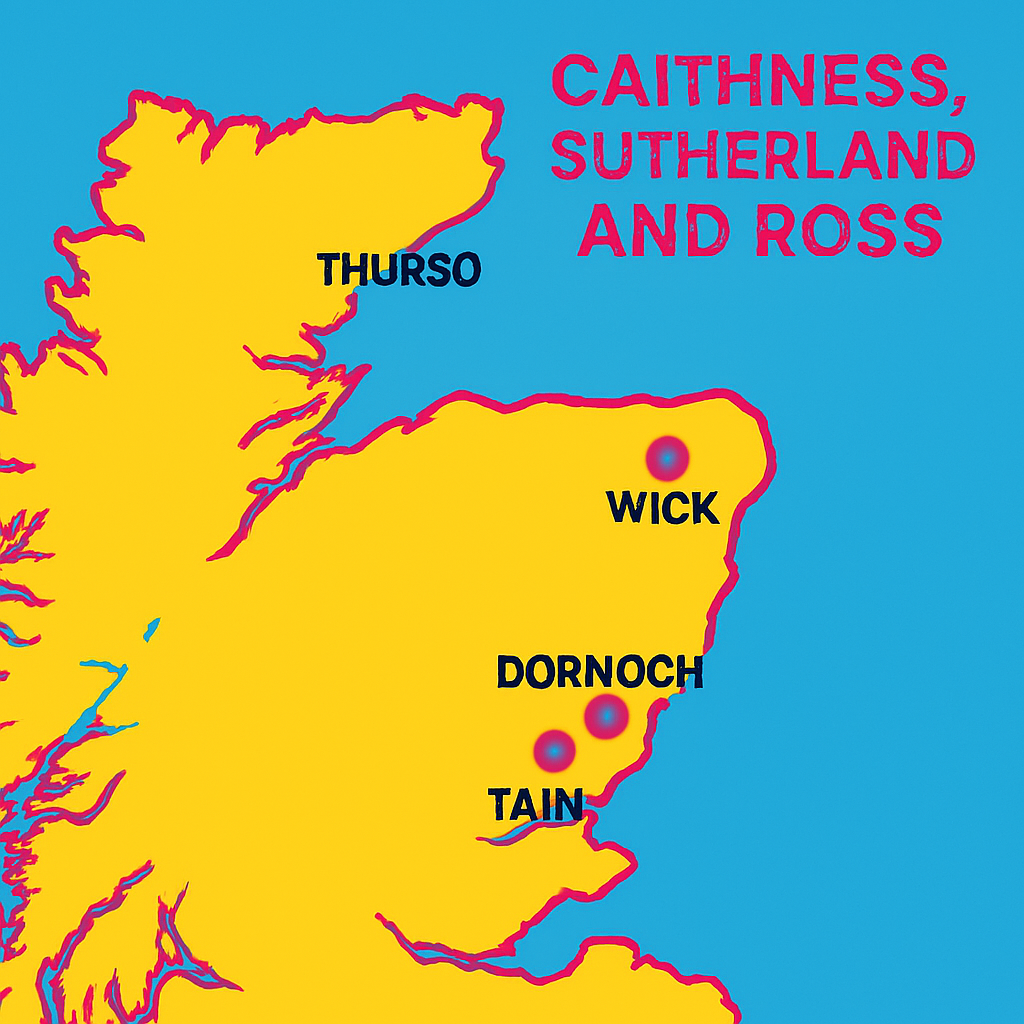
Key Challenges & Socialist Solutions
The Dounreay Transition & Economic Reinvention
The Overarching Economic and Social Issue
This is the defining economic challenge for Caithness and North Sutherland, requiring a managed transition to secure the region's future.
-
Decommissioning Timeline & Jobs: The Dounreay nuclear site is the largest employer in the far north. The central question is: What comes next?
Skills retention and redeployment of the highly specialised workforce must be prioritized.Accelerating new industries to provide alternative employment before the decommissioning cliff-edge.
- Nuclear Future? There is active debate about hosting Small Modular Reactors (SMRs) or fusion research. Any position must be informed by local consultation, balancing potential jobs with environmental and legacy concerns.
- Renewable Energy & the "Green Freeport" Opportunity: The Cromarty Firth has been designated a Green Freeport. The campaign must focus on turning this into tangible, high-quality jobs in offshore wind manufacturing, green hydrogen, and biofuels. The key demand is that local communities from Wick to Alness see direct employment benefits, not just supply chain work passing through.
Transport & Digital Isolation
- The Far North Railway Line: The line from Inverness to Wick and Thurso is spectacular but slow, vulnerable, and often seen as neglected. Campaigns must push for significant investment—not just for tourism but as a vital lifeline for communities without reliable road alternatives in winter.
-
Road Infrastructure:
A9: The dualling of the A9 from Inverness to Perth is critical, but the northern section (Tore to Scrabster) also needs safety and overtaking improvements."Single-Track Siberia": Vast areas of West Sutherland, Assynt, and Coigach are served by fragile single-track roads (e.g., the A838, A894). These are expensive to maintain, treacherous in winter, and a barrier to economic development. Demanding fair share of infrastructure funding is essential.
- Ferries to Orkney: The Scrabster to Stromness and Gills Bay to St Margaret's Hope routes are crucial for tourism and freight. Their reliability and fair pricing are local economic issues.
- Digital Divide: Despite improvements, significant rural areas still lack reliable broadband or mobile coverage, crippling remote work and business potential.
Rural Depopulation & The Housing Paradox
- The "Empty North" Paradox: Vast landscapes coexist with emptying villages. Depopulation is driven by a lack of economic opportunity, poor transport, and a critical shortage of affordable housing.
-
Housing Crisis: The issue is twofold:
Lack of Supply & High Costs: In key service towns like Tain, Dornoch, Golspie, and Thurso, there is a shortage of affordable homes for sale or rent.Vacant & Second Homes: In scenic coastal and rural areas (e.g., Assynt, East Sutherland coastline), high levels of second homes and holiday lets drain permanent population and distort the housing market.
- Crofting & Land Use: Crofting remains a vital cultural and economic system, particularly on the west coast. Support for new entrants, affordable homes on croft land, and adding value to local produce is key.
Public Services on the Edge
- Caithness General Hospital & Rural Maternity Services: There is a deep-seated and fierce campaign to retain and enhance services at Caithness General in Wick, reversing the centralisation of specialist care to Raigmore (Inverness). The threat to consultant-led maternity services is a particularly emotive issue, symbolising the downgrading of the far north.
- School Closures: Falling rolls due to depopulation threaten the network of small rural schools, which are community anchors.
Cultural Identity & Land Ownership
Three Distinct Identities
The constituency contains distinct identities: the Norse-influenced, pragmatic Caithness; the historic county and golf tourism of Sutherland; and the Gaelic-influenced, rugged landscapes of Wester Ross.
Legacy of the Clearances
The historical memory is potent, especially in Sutherland. Modern depopulation is often framed as a "new clearance," driven by economic forces rather than landlords.
Community Ownership Legacy
Informed by strong sentiment around land reform and community ownership, exemplified by the pioneering Assynt Crofters' buyout in 1993.
A one-size-fits-all approach will fail. Our campaign respects and responds to this rich tapestry of identities and histories.
Our Campaign Strategy
How we will fight for Caithness, Sutherland and Ross with socialist solutions:
Lead with the Economic Transition Plan
Articulate a credible, detailed vision for a post-Dounreay economy. Champion the Cromarty Firth Green Freeport as a job-creator for the entire region, and support diversification into decommissioning expertise, space technology (Sutherland Spaceport), and sustainable aquaculture.
Fight for Infrastructure Justice
Frame the poor state of the Far North railway and single-track roads as a symbol of political neglect. Demand a "Rural Infrastructure Premium" in funding formulas to account for remoteness and harsh weather.
"Save Caithness General" as a Banner
Be an unambiguous, loud advocate for protecting and investing in local hospital services. This is a non-negotiable issue of equity and safety for northern constituents.
Embrace Community Empowerment
Support policies that give communities first refusal on land sales, empower them to develop affordable housing, and ensure a mandatory percentage of local employment in major energy projects.
The "Dual Advocate" with Northern Focus
The MP must fight in Westminster for energy policy, transport investment, and broadband. The MSP must fight in Holyrood for health services, housing powers, and the A9 dualling. Both must be seen as fierce northern champions.
A New Vision for the Highland Frontier
This region is not a remote outpost, but a national asset in energy and natural capital, deserving of investment and respect. Our campaign will fight to secure:
Managed Energy Transition
From Dounreay to green jobs with community benefits
Reversed Depopulation
Affordable housing and thriving rural communities
Infrastructure Justice
Fair investment in transport and digital networks
Protected Public Services
Local healthcare and education safeguarded
Together, we can build a future where Caithness, Sutherland and Ross is recognized not for what it was, but for what it can become: a beacon of sustainable development, community empowerment, and economic resilience in Scotland's north.